
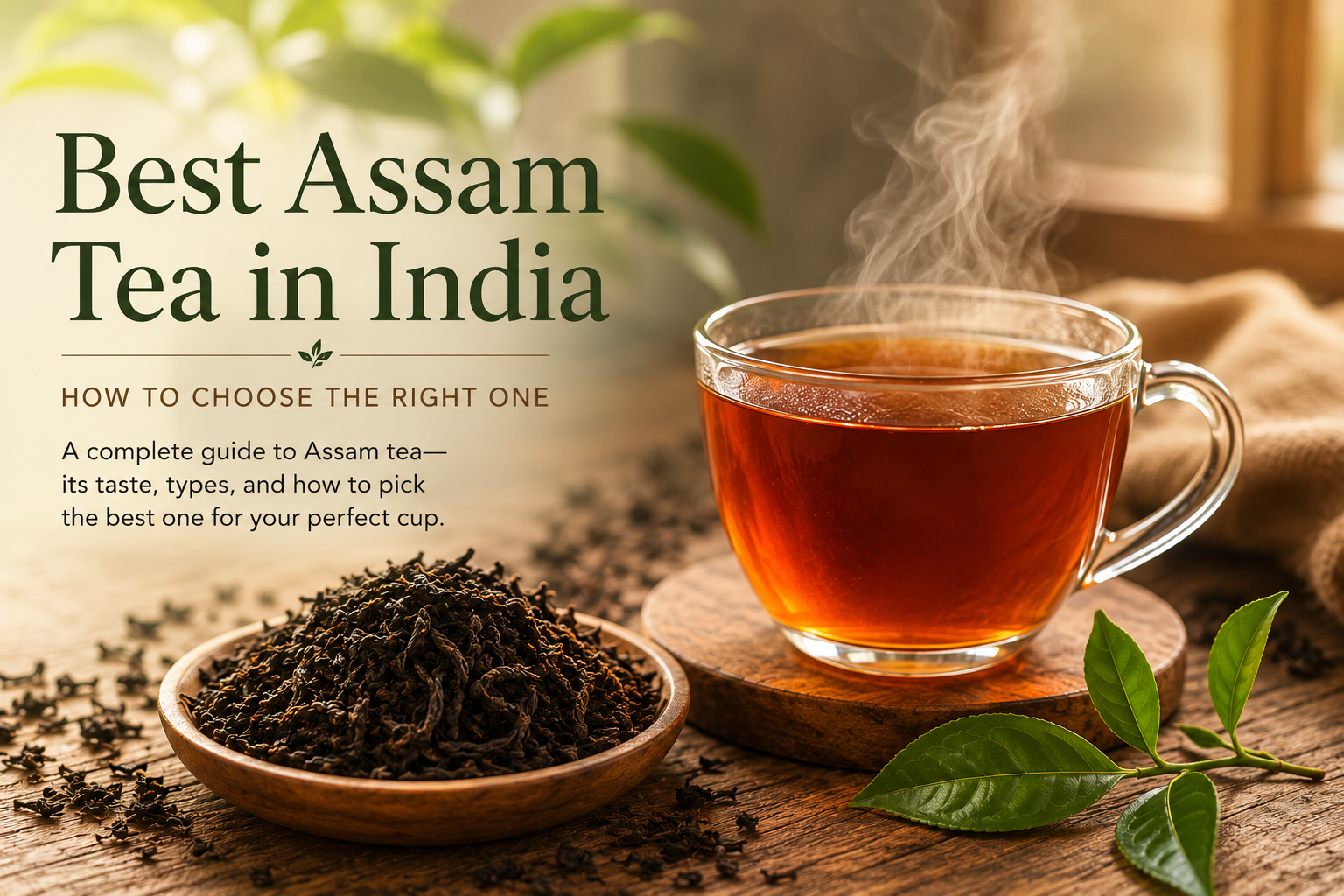
The first sip can tell you whether you’ve found the right tea.
A good Assam tea doesn’t need much introduction. The aroma rises from the cup, the liquor turns a deep amber, and the first sip brings that familiar combination of strength, briskness and maltiness. Add milk and sugar, and it becomes the backbone of a comforting cup of chai. Drink it plain, and you can start noticing the character of the tea itself.
But when you’re looking for the best Assam tea in India, there’s a problem: almost every packet seems to promise the same thing.
Premium. Strong. Authentic. Rich.
So how do you actually choose?
The answer isn’t simply to pick the most expensive packet or the one with the word “premium” printed across it. The better approach is to understand where the tea comes from, how it has been processed, how you intend to drink it, and what you should expect when it reaches your cup.
Quick Answer: What Is the Best Assam Tea in India?
The best Assam tea depends on how you like to drink your tea.
For strong Indian chai, look for a good-quality Assam CTC tea with plenty of body and briskness. For a more leaf-focused and nuanced experience, explore orthodox Assam tea.
More broadly, a good Assam tea should have a clear origin, a pleasant aroma, a balanced flavour, good body and freshness. The Tea Board India describes Assam tea as known for its strong, brisk and malty character, with a rich, full-bodied cup and deep-amber liquor. Both CTC and orthodox teas are produced in Assam.
So rather than asking only, “Which brand is the best?”, ask:
Which Assam tea is best for the way I drink tea?
Why Is Assam Tea So Special?
Assam isn’t just a name on a tea packet.
It is one of India’s defining tea-growing regions, situated in the northeast of the country and shaped by the landscape and climate around the Brahmaputra Valley.
The Tea Board India notes that Assam’s tea-growing conditions include rich loamy soil, substantial rainfall and a distinctive climate. These factors contribute to the characteristics for which Assam tea is known.
And then there’s the flavour.
Assam tea is typically associated with:
- A bold, full-bodied cup
- Briskness
- Malty notes
- Deep amber liquor
- A strong aroma
- Good compatibility with milk and sugar
That last characteristic is particularly important in India.
A tea that tastes wonderful on its own isn’t necessarily the tea you want for a saucepan of chai.
When milk, sugar, ginger, cardamom or other spices enter the picture, the tea needs enough character to remain noticeable.
That’s one reason Assam tea has become such a natural choice for Indian tea drinkers.
6 Things to Check Before Buying Assam Tea
If you’re comparing different Assam teas, don’t start with the packaging.
Start with the tea.
1. Look for a Clear Assam Origin
If you’re specifically searching for Assam tea, the origin should be clear.
A transparent tea brand should tell you what you’re buying rather than relying entirely on broad phrases such as “Indian tea” or “premium black tea.”
Assam has a distinct tea identity, and the region itself matters to the character of the cup.
For buyers who specifically want Assam’s characteristic boldness and maltiness, origin is therefore one of the first things worth checking.
2. Understand CTC vs Orthodox Tea
This is one of the most useful distinctions to understand.
CTC stands for Crush, Tear, Curl. It is a processing method that produces small, granular tea particles and is widely associated with strong, quick-brewing tea.
Orthodox tea is produced using a different manufacturing approach that generally retains more of the leaf’s form.
Assam produces both CTC and orthodox teas, according to the Tea Board India. Assam Orthodox Tea is also a registered Geographical Indication.
Neither style should automatically be considered “better.”
They simply give you different experiences.

The best Assam tea for you is therefore partly determined by what happens after you open the packet.
3. Think About Your Brewing Style
How do you normally make tea?
If your morning begins with a saucepan, milk, sugar and perhaps a little ginger or cardamom, choose a tea that can stand up to that preparation.
If you use a teapot or infuser and drink your tea without milk, you may want to explore teas where aroma and leaf character play a larger role.
There is no universal “best” brewing method.
There is only the method that gives you the cup you enjoy.
4. Pay Attention to Aroma
Before tasting your tea, smell it.
Fresh dry leaves should have a pleasant tea aroma rather than an overwhelmingly stale or musty smell.
Then smell the brewed tea.
The aroma is part of the experience, and it can tell you a surprising amount about what you’re about to drink.
For Assam tea, look for a satisfying depth rather than simply chasing maximum intensity.
5. Consider the Balance Between Strength and Smoothness
Strong doesn’t always mean better.
A tea can be powerful but unpleasantly harsh. Another can be lighter but much more enjoyable.
What you’re looking for is balance.
A good Assam tea should give you enough strength to make its presence known without making every sip feel overly astringent.
This becomes especially important if you’re drinking it without milk.
6. Check How the Tea Has Been Stored
Even a good tea deserves good storage.
Once you open your tea, protect it from:
- Moisture
- Direct sunlight
- Heat
- Strong surrounding aromas
- Excessive air exposure
An airtight container in a cool, dry place is a simple starting point.
Tea can absorb surrounding smells surprisingly easily, so keeping it beside strongly aromatic spices isn’t ideal.
What Should Assam Tea Taste Like?
One of the easiest ways to choose tea is to know what you’re looking for.
Assam tea is generally associated with a bold, brisk and malty flavour profile. Tea Board India also describes Assam tea as having a rich, full-bodied cup and deep-amber colour.
You may notice:
Malty:
A warm, rounded flavour that can remind some drinkers of malt or toasted grain.
Brisk:
A lively quality that gives the tea energy and makes it particularly enjoyable in the morning.
Full-bodied:
A tea with enough weight and presence to remain satisfying, particularly with milk.
Aromatic:
The brewed tea should have a noticeable fragrance rather than smelling flat.
These characteristics can vary depending on the tea, season, estate, processing method and preparation.
That variation is part of what makes Assam tea interesting.
Is Assam CTC Tea Better for Chai?
For many Indian tea drinkers, Assam CTC is an excellent choice for chai.
Its strength and body make it well suited to a preparation where the tea is combined with milk, sugar and spices.
Imagine a simple kitchen scene.
Water comes to a simmer. Ginger hits the pot. A crushed cardamom pod follows. Assam tea goes in, and the liquid quickly deepens in colour. Milk is added. The aroma changes.
The tea doesn’t disappear beneath everything else.
It holds its ground.
That’s what you’re looking for in a chai tea.
If you’re buying Assam tea specifically for everyday milk chai, a good CTC Assam is therefore a sensible place to start.
Assam Tea vs Other Indian Teas
India produces many distinctive tea styles, so comparing regions can help you understand what makes Assam different.

These are broad descriptions, not rules. Tea varies considerably within each region.
But if you want a strong Indian tea with enough body for milk and spices, Assam is an especially natural choice.
What Makes a Premium Assam Tea Worth Buying?
The word premium alone doesn’t tell you very much.
Instead, look for a combination of factors:
Clear sourcing
You should have a reasonable understanding of where your tea comes from.
Suitable processing
Choose CTC or orthodox depending on how you want to drink the tea.
Good sensory character
Look for aroma, colour, body and flavour rather than simply chasing strength.
Freshness
Proper packaging and storage help preserve the tea’s character.
Consistency
If you’re buying tea for everyday drinking, you want a cup you can enjoy repeatedly—not one impressive cup followed by several disappointing ones.
Transparency
A good tea brand should make it easy for you to understand what you’re buying.
Premium should be something you can experience in the cup, not just something printed on the label.
How to Choose the Best Assam Tea for Your Cup
If you’re still unsure which Assam tea to buy, use this simple decision guide.
Choose Assam CTC if:
- You drink chai regularly.
- You add milk and sugar.
- You enjoy strong tea.
- You want a quick-brewing everyday tea.
- You want the tea flavour to remain noticeable alongside spices.
Explore orthodox Assam if:
- You enjoy drinking tea without milk.
- You want to explore aroma and leaf character.
- You enjoy slower tea rituals.
- You are interested in specialty Assam teas.
And if you’re new to Assam tea, don’t overthink it.
Start with the style that matches your everyday drinking habit.
How to Brew Assam Tea for Better Flavour
Buying a good tea is only half the experience.
Your brewing method matters too.
For a simple cup of Assam black tea:
- Start with fresh water.
- Bring it to the appropriate brewing temperature.
- Add your tea.
- Allow it to steep according to the tea’s instructions and your preferred strength.
- Strain and taste.
- Add milk, sugar or other ingredients if desired.
If your cup tastes too bitter, don’t automatically add more sugar.
Try adjusting the brewing time first.
And if you’re preparing chai, experiment with the ratio of water, milk, tea and spices until you find the balance that works for you.
For Leaforah readers, this can become a useful next step: learn how to brew Assam tea properly before deciding whether a particular tea is right for you.
How Leaforah Approaches Assam Tea
At Leaforah, tea isn’t meant to be complicated.
We think a good cup should feel considered without feeling intimidating.
Assam tea has a naturally strong identity, so the goal isn’t to hide it beneath unnecessary flavour or complicated rituals. It’s about giving you a tea that fits naturally into the moments when you reach for a cup.
Maybe it’s the first cup before the day begins.
It’s an afternoon break.
Or it’s chai shared with family.
It’s ten quiet minutes when you finally put your phone down.
That’s where our idea of “The Luxury of Time” comes in.
The tea matters.
But so does the moment you make for yourself around it.
So, What Is the Best Assam Tea in India?
There isn’t one tea that can honestly be called the best for every person.
The right Assam tea depends on your taste and your tea ritual.
If you want bold, strong chai, start with Assam CTC.
If you want to explore the character of the leaf, consider orthodox Assam tea.
Look for clear origin, good aroma, balanced strength, freshness and a tea that suits your preferred preparation.
And don’t let the word “premium” make the decision for you.
Taste should have the final say.
Because the best Assam tea isn’t necessarily the one with the fanciest packaging or the biggest claim.
It’s the one that makes you pause after the first sip and think:
“Yes. This is my cup of tea.”
A Better Tea Starts With the Right Choice
You don’t need to become a tea expert before buying Assam tea.
Know where it comes from.
Understand CTC and orthodox.
Think about how you drink it.
Then brew it well.
The rest comes down to taste.
Explore Leaforah teas and find your next everyday cup.