
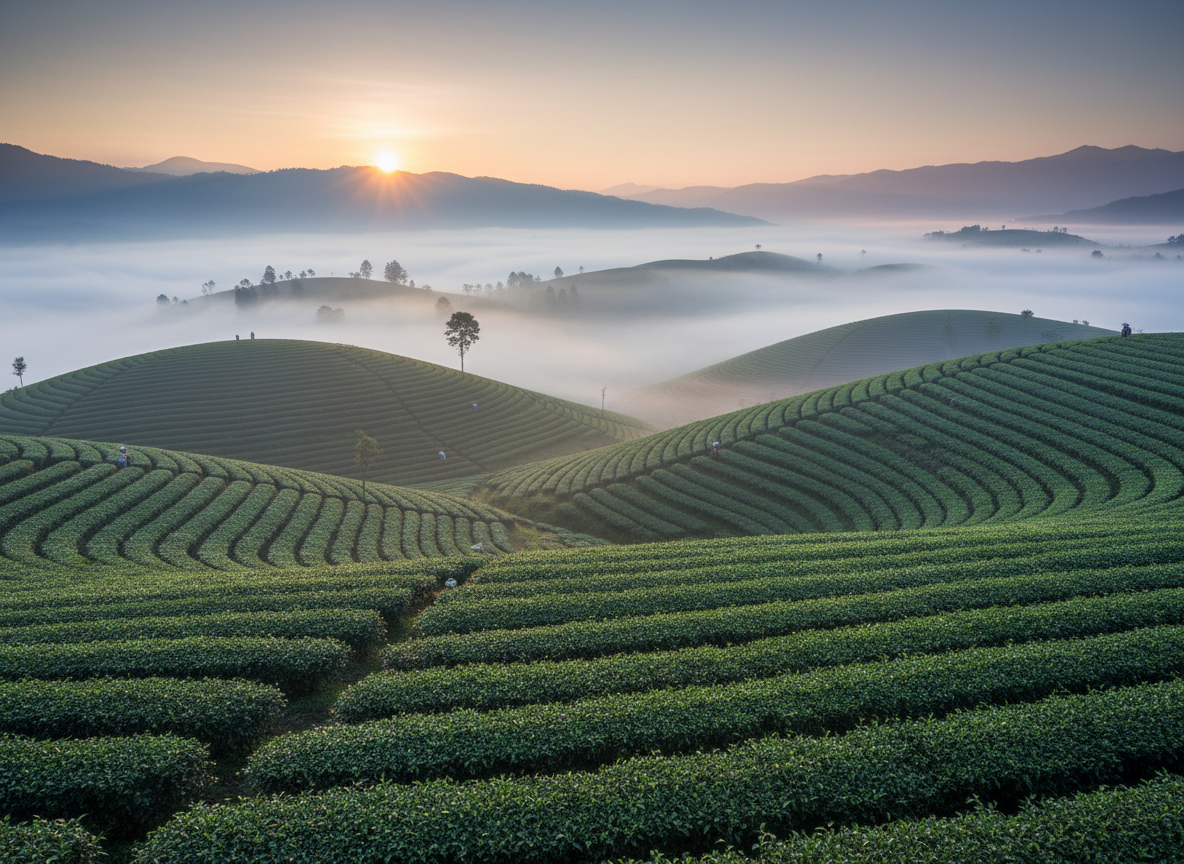
There’s a reason Darjeeling is called the Champagne of teas. Grown at altitudes above 2,000 metres in the foothills of the Himalayas, the leaves absorb something the rest of the world simply can’t replicate — cool mist, thin air, and soil that’s been shaped by centuries of rain and forest.
The region produces four distinct flushes through the year. The first flush, harvested in March and April, is the most prized — delicate, light, with a muscatel note that tea lovers travel across the world to experience. The second flush, picked in May and June, is fuller and more complex. The monsoon flush is heavy and less nuanced. The autumnal flush rounds things out — deeper, earthier, satisfying in a different way.
What makes Darjeeling genuinely special isn’t just terroir, though. It’s the fact that much of it is still hand-plucked by workers who know exactly which two leaves and a bud to select. That level of attention at the source is rare in any food or drink category.
If you’ve only ever had Darjeeling from a supermarket box, you owe it to yourself to try a first-flush single-estate. It doesn’t taste like what you’re expecting. That’s the point.
Leave a Reply